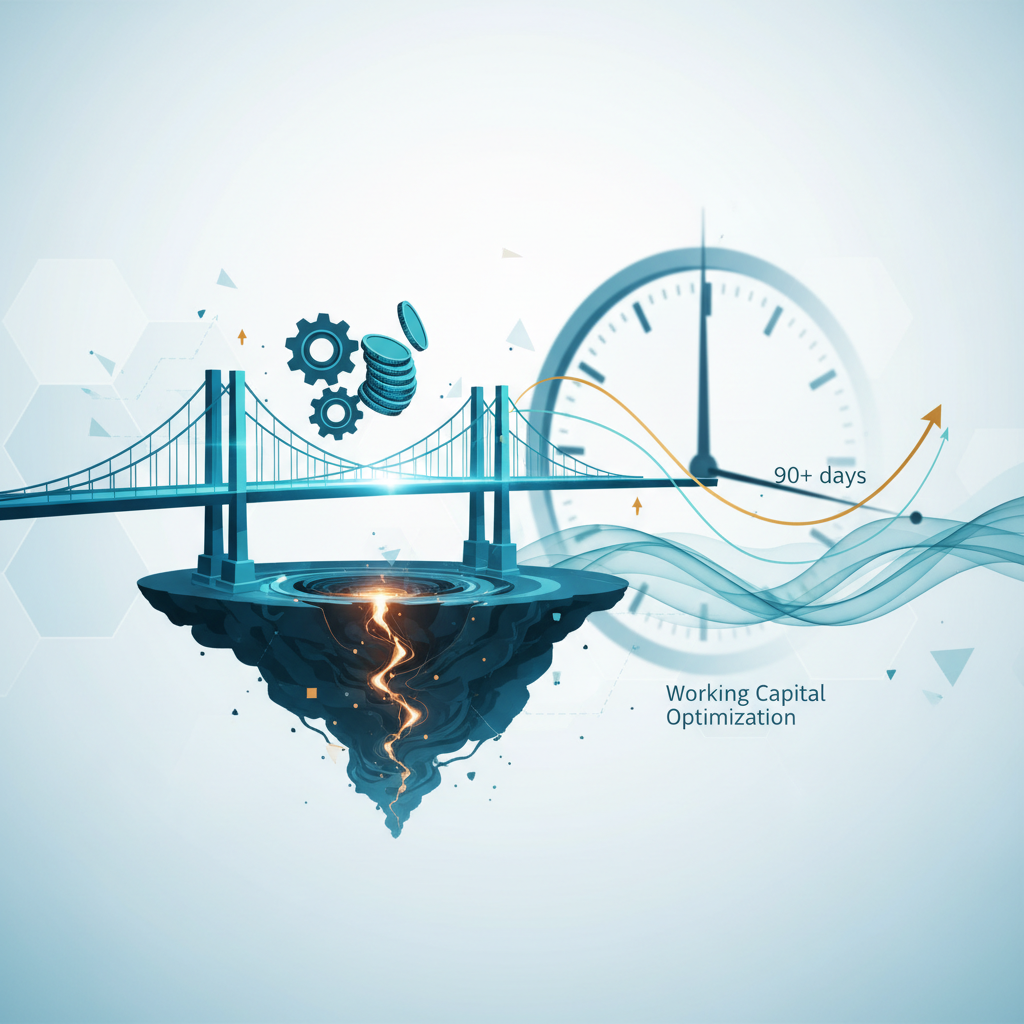
The bankruptcy filing was routine. Mid-sized manufacturing company, 47 employees, 18 years in business. Revenue: €12.4M. Gross profit: 31%. EBITDA: positive.
And completely out of cash.
"You are not unprofitable. You are illiquid. Your customers owe you €3.8M. You owe your suppliers €890K. You have €140K. The math does not work."
— Insolvency AdministratorThat is the €2.3M gap—the difference between what you are owed and what you have. And it is killing European businesses at scale.
📊 67% of European B2B Companies: The Same Crisis, Different Names
| Country | 90+ Day Delays | Risk Level |
|---|---|---|
| 🇮🇹 Italy | 89% | Critical |
| 🇫🇷 France | 74% | High |
| 🇪🇸 Spain | 71% | High |
| 🇩🇪 Germany | 63% | Medium |
| 🇬🇧 UK | 59% | Medium |
💸 The €2.3M Penalty: What 90-Day Delays Actually Cost
The EU Commission 2025 Late Payment Report calculated the average cost for mid-market B2B companies (€5M-€50M revenue):
Direct Costs
Opportunity Costs
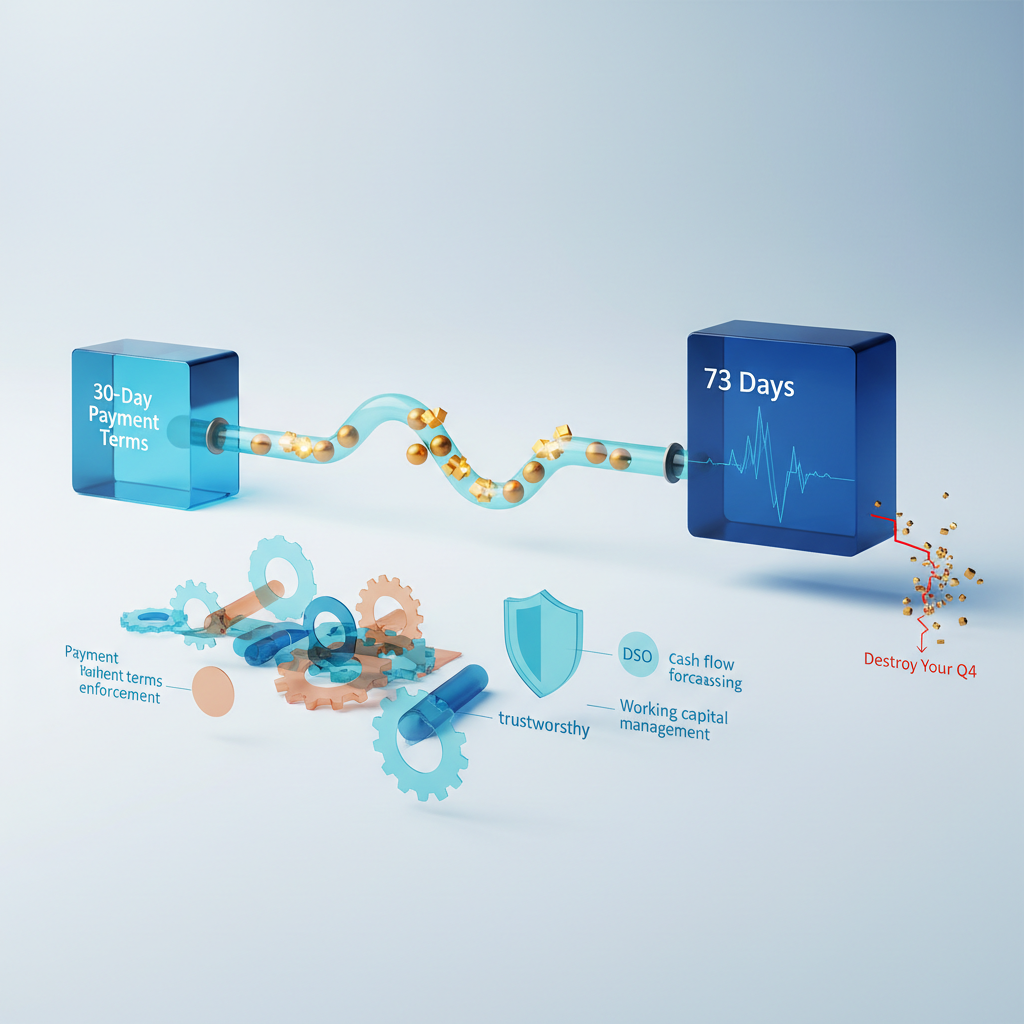
"We calculated that every day beyond 30-day terms costs us €847 in real economic value—between borrowing costs, lost opportunities, and operational drag. A 90-day delay on a €100K invoice? We are giving them €50,880 in free financing."
— German CFO⚠️ Why 43% of European Bankruptcies Link to Late Payments
EU Commission data: 43% of business insolvencies directly stem from late payment cash flow problems.
Not bad products. Not bad markets. Not bad management. Late payments.
The Typical Cascade
Growth Phase
Sales grow, receivables grow proportionally
Warning Signs
Payment delays accumulate, working capital tightens
Stress Mode
Miss supplier payments to cover operating costs
Crisis Point
Suppliers demand cash terms, credit line maxed
Death Spiral
Cannot fulfill orders without cash, revenue drops
"We went from €8M revenue and growing to insolvency in 11 months. Not because we were not profitable—because we could not convert receivables to cash fast enough. We were simultaneously successful and bankrupt."
— Italian Logistics CFO🔧 The 5-Move Strategy That Breaks the Cycle
Move 4: Strict 90-Day Professional Collection Rule
0 of 6 complete📈 The €4.7M Recovery: A Case Study
A €19M logistics company was drowning:
They implemented all five moves over six months:
"The board was ready to accept 90-day DSO as industry standard. Then we calculated the real cost: €2.3M annually in lost working capital value. That bought us €15M in growth capacity we could not access. We were not managing receivables—we were leaving €15M on the table."
— CFO💡 The Bottom Line
This is Existential
The €2.3M gap is not a late payment problem—it is an existential threat. 67% of European B2B companies are operating in crisis mode without realizing it.
Attack All Five Points
Visibility (daily tracking), Prevention (early alerts), Protection (insurance), Economics (90-day rule), Incentives (scoring).
No Half Measures
Implement all five, not just one or two. Half measures get half results—and half results still mean cash flow crisis.
📋 Next Steps
Collecty specializes in B2B receivables management and professional collection services for European companies. We have recovered over €847M and helped 400+ companies break the 90-day cycle. Schedule a Consultation →

Sarah Lindberg
International Operations Lead
Sarah coordinates our global partner network across 160+ countries, ensuring seamless cross-border debt recovery.