German Debt Collection: What American Companies Get Wrong (And How to Fix It)
Your German client owes you €50,000. Five emails. Three voicemails. Nothing. Sound familiar?
You shipped the goods. The invoice is 90 days overdue. Your CFO is asking questions. And your German client has gone quiet.
This scenario plays out thousands of times every year. American companies—used to a certain approach with domestic collections—apply the same tactics to their German receivables. And it fails.
The result? €47 billion in cross-border B2B debt goes uncollected in Europe annually. A significant portion involves German debtors and American creditors who simply did not understand the rules of the game.
Why American Collection Tactics Fail in Germany
5-phase structured escalation leveraging German Mahnverfahren procedures
Verify company via Handelsregister, map GmbH/AG structure and Geschäftsführer authority.
- Pull Handelsregister extract
- Check for Insolvenz flags
- Identify Geschäftsführer signing authority
Build German-compliant evidence with interest per BGB § 288.
- Calculate Verzugszinsen (9% above Basiszinssatz for B2B)
- Index Rechnung + Lieferschein
- Prepare AGB and Kaufvertrag terms
Calibrated outreach respecting German business formality and directness.
- Initial Mahnung in formal German
- Phone follow-up to Buchhaltung
- Escalation to Geschäftsführer
Pre-legal Mahnung with explicit Mahnverfahren timeline.
- Send formal Mahnung via Einschreiben
- Reference BGB § 286 default provisions
- Set 10-day response deadline
Route via Mahnbescheid or Vollstreckungsbescheid procedures.
- File Mahnbescheid at Amtsgericht
- Vollstreckungsbescheid for uncontested claims
- Coordinate with Rechtsanwalt for Klage
⚖️ Route via Mahnbescheid or Vollstreckungsbescheid
The Numbers: Why Local Expertise Matters
The data on cross-border collection is clear: companies using local representation in Germany see 340% higher recovery rates compared to those managing collections remotely from the US.
This is not a marginal improvement. It is the difference between writing off a €50,000 invoice and recovering €42,500 of it.
Why such a dramatic difference?
The Right Approach: Three Steps to Collecting in Germany
Successful German debt collection follows a specific sequence:
Once payment is overdue, send a formal written reminder in German. This is not your friendly "just checking in" email. It is a documented notification that payment is due, with specific reference to the invoice, amount, and original payment terms.
Best practice: Send this on day 31 (one day after payment was due). German business culture expects promptness.
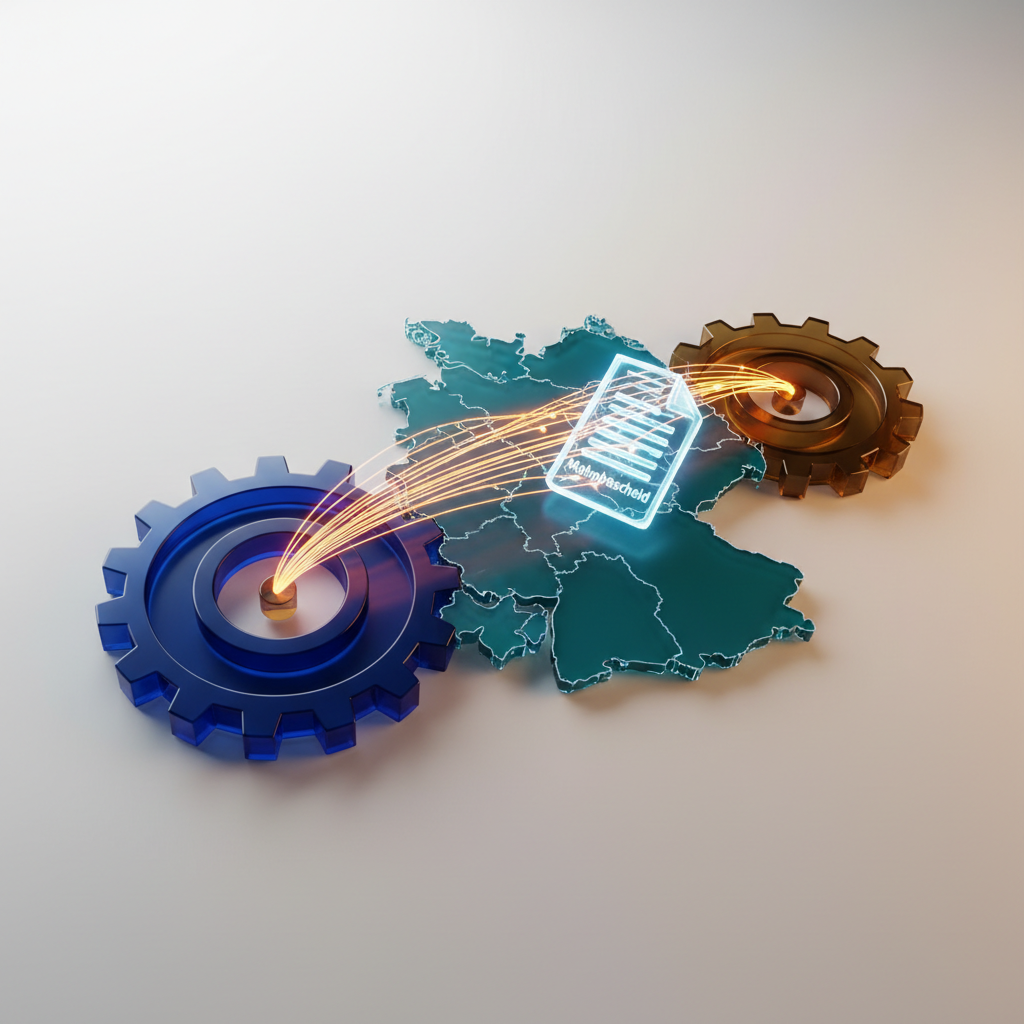
If the formal reminder does not produce payment within 14-21 days, file for a Mahnbescheid through the German court system. This is an automated procedure—you file the application, pay a small fee, and the court issues a payment order to your debtor.
The debtor has 14 days to object. If they do not object, the Mahnbescheid becomes enforceable—equivalent to a court judgment.
Critical point: You cannot skip this step. German courts will not hear a collection case without evidence that you attempted the Mahnbescheid procedure first.
If the debtor objects to the Mahnbescheid, the case moves to standard litigation. If they ignore it, you now have an enforceable order and can pursue asset seizure, bank account garnishment, or other enforcement mechanisms.
At this stage, local legal counsel is essential. German enforcement procedures have specific requirements that vary by state (Bundesland) and asset type.
Timeline: When to Escalate
German payment culture operates on clear expectations:
Waiting beyond 90 days damages your position. Recovery rates decline sharply after this point, regardless of approach.
The Bottom Line
German debt collection is not about being aggressive. It is about being precise.
The companies that recover their cross-border receivables are not the ones that send more emails or make more threats. They are the ones that understand German business culture, follow proper legal procedure, and engage local expertise early.
€47 billion goes uncollected every year. Most of it is recoverable—with the right approach.
If you have outstanding receivables in Germany, the worst thing you can do is nothing. The second worst thing is applying American tactics to a German problem.
Get local help. Follow the process. Collect what you are owed.
Collecty specializes in cross-border B2B debt collection across Europe. Our German team handles everything from initial contact through legal enforcement—in German, following German procedures, with German results. Contact us about your German receivables →

Sarah Lindberg
International Operations Lead
Sarah coordinates our global partner network across 160+ countries, ensuring seamless cross-border debt recovery.