There's a special kind of hell reserved for B2B exporters who learn international trade law the expensive way.
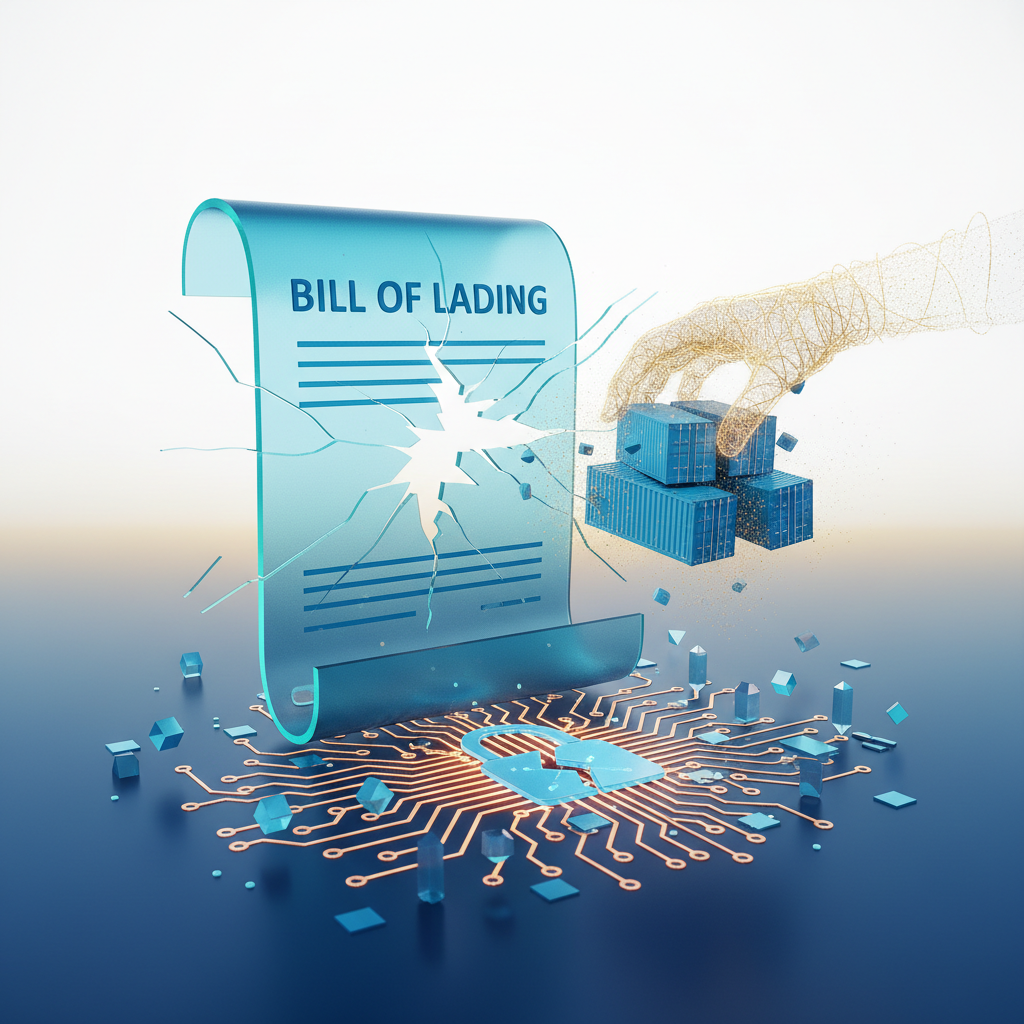
I'm talking about the moment you realize that the three-word phrase you signed without thinking—"Clean Bill of Lading"—just made you legally responsible for 60 tons of gravel you didn't order, didn't load, and definitely didn't intend to ship halfway across the world.
A Belgian textile manufacturer learned this lesson in March 2019.
They exported €180,000 worth of premium fabrics to a buyer in Ho Chi Minh City. Standard transaction. Repeat customer. Trusted freight forwarder.
The freight forwarder sent the Bill of Lading (B/L) via email: "Please sign and return. Shipment ready for departure."
They signed it. Same day.
Never visited the port. Never opened a container. Never verified weight, seal integrity, or cargo contents.
Three weeks later, the buyer in Vietnam sent photos:
Container 1: Gravel. Container 2: Gravel. Container 3: Gravel.
60,000 kilograms of construction-grade rocks.
Zero textiles.
The buyer refused payment. Demanded a full refund. Threatened legal action.
The Belgian company called the shipping line: "There's been a mistake. We shipped textiles, not gravel."
Shipping line: "You signed a clean Bill of Lading. That confirms the cargo was loaded in good condition and matches the description. Our liability ended when you signed. Take it up with your freight forwarder."
Freight forwarder: [Phone disconnected. Email bounced. Office address was a UPS Store mailbox.]
Total loss: €180,000.
Legal recourse: €0.
The business filed for bankruptcy four months later.
Here's exactly what went wrong—and the systematic framework for never signing yourself into financial oblivion.
What a Bill of Lading Actually Is (And Why Most People Don't Understand It)
A Bill of Lading (B/L) is three things simultaneously: Receipt – Proof that the carrier received the cargo Contract – Terms of carriage between shipper and carrier Title document – Whoever holds the B/L owns the cargo When you sign a "Clean Bill of Lading," you're making a legal declaration: "I confirm that the goods described in this document were loaded onto the vessel in good condition, with no apparent defects, and the description is accurate." Notice what you're NOT saying:
What It IS
- "I trust the freight forwarder"
- "I assume this is correct"
- "Someone else verified this"
What It Is NOT
You're saying: "I personally confirm this." Once you sign, the law treats that signature as irrevocable fact. If the cargo doesn't match the B/L description, the law assumes YOU are the one who committed fraud (not the carrier, not the forwarder). Why? Because YOU signed the verification.
The Fraud: How 60 Tons of Fabric Became 60 Tons of Gravel
Here's how the scam worked:
Step 1: Establish Trust (6 months earlier)
The freight forwarder handled 8 successful shipments for the Belgian company over 6 months. Every shipment arrived intact. Payments cleared. No issues.
Trust established.
Step 2: Load Legitimate Cargo (Day 1)
The Belgian company delivered €180,000 of textiles to the freight forwarder's warehouse near Antwerp port.
Freight forwarder issued a receipt: "Received 3 containers of textiles, total weight 18,500kg."
Everything seemed normal.
Step 3: Issue the Bill of Lading (Day 2)
Freight forwarder emails the B/L:
*"Container TCLU 234567: Textiles, 18,500kg, Clean B/L. Container MSCU 876543: Textiles, 18,200kg, Clean B/L. Container HLCU 345678: Textiles, 19,100kg, Clean B/L.
Please sign and return for shipment departure."*
Belgian company signed all three. Returned within 2 hours.
Step 4: Swap the Cargo (Day 3-4)
After receiving the signed B/L, the freight forwarder:
- Unloaded the textiles from the containers
- Sold them on the black market (Lagos, Nigeria—confirmed by later Interpol investigation)
- Filled the containers with construction gravel (sourced from a local query)
- Sealed the containers with new, identical seals
- Shipped the gravel to Vietnam
Cost of gravel: €800 (60 tons at €13/ton). Revenue from selling textiles: ~€90,000 (50% of wholesale value). Net profit: €89,200.
Step 5: Disappear (Day 5)
Freight forwarder:
- Closed the shell company (registered 8 months earlier)
- Disconnected phones
- Abandoned the office (rented month-to-month)
- Vanished
The Belgian company didn't realize anything was wrong until the buyer in Vietnam opened the containers 22 days later.
Why the Belgian Company Had Zero Legal Recourse
They Sued the Shipping Line First
Claim: "You transported the wrong cargo."
Shipping line's defense:
"We transported exactly what the Bill of Lading described. The B/L said 'textiles, 18,500kg.' We don't open containers. We transport sealed units. The shipper (you) signed a Clean B/L confirming the contents. If the contents don't match, that's fraud on YOUR part, not ours."
Court ruling: Case dismissed. Shipping line has no liability once a Clean B/L is signed.
They Sued the Freight Forwarder Second
Problem: The freight forwarder was a shell company.
- Registered in Belgium 8 months earlier
- €1,000 in declared capital
- Rented office, month-to-month lease
- Directors were fake names (stolen identities)
- Bank account emptied and closed
No assets to seize. No real people to prosecute.
Interpol eventually traced the textiles to Lagos, but Nigerian authorities declined to investigate (no bilateral enforcement treaty for commercial fraud under €500K).
They Tried Insurance
Cargo insurance claim: Denied.
Why? The insurance policy covered "loss or damage during transit."
This wasn't loss or damage. This was fraud prior to transit.
The gravel arrived in perfect condition. No loss. No damage.
The fact that it wasn't textiles? That's not covered.
Total recovery: €0.
What This Teaches B2B Exporters
Signing a Clean B/L without physical inspection is like signing a blank check. You're legally confirming contents you never saw. If the contents are wrong, the law assumes YOU lied, not the carrier.
The Systematic Fix: Never Sign Blind
Point 1
NoteVisit the port/warehouse
Point 2
ImportantVerify container seals are intact
Point 3
CriticalSpot-check contents (open at least one container)
Point 4
NoteVerify weight matches expected range
Point 5
ImportantWeigh the loaded container at a certified scale
Point 6
CriticalCompare to expected weight
Point 7
NoteFlag discrepancies >10%
Point 8
ImportantCheck seal numbers match the freight forwarder's documentation
Point 9
CriticalPhotograph the seals
Point 10
NoteIf seals are broken or replaced, STOP and investigate
Point 11
ImportantCheck registration history (companies <1 year old = high risk)
Point 12
CriticalVerify physical office (not a mailbox)
Point 13
NoteCheck references (call past clients directly)
Point 14
ImportantVerify insurance (professional indemnity minimum €1M)
Point 15
CriticalIndependent cargo surveyor inspects and certifies contents
Certificate of Inspection
NoteIssues a
Point 17
ImportantPrevents fraud (surveyors have legal liability)
Point 18
CriticalFreight forwarder rushes you to sign
Point 19
NoteThey claim "inspection isn't standard procedure"
Point 20
ImportantWeight on B/L is suspiciously round (e.g., exactly 20,000kg)
Point 21
CriticalContainer seals don't match documentation
Point 22
NoteFreight forwarder registered <1 year ago
Point 23
ImportantThey refuse to let you visit the warehouse/port
This is educational information only. Consult qualified California counsel for specific compliance requirements.
The Bottom Line: One Signature = Total Liability
5 practices that drive results
Never sign a Clean B/L without physical verification
Always verify weight at a certified scale
Use established freight forwarders with verifiable history
Hire a surveyor for shipments >€50K
Photograph everything (seals, contents, weight tickets)
These patterns are based on successful recoveries—implementation requires adapting to each debtor's specific situation.
Sources
International Chamber of Commerce (ICC) – "Freight Forwarder Fraud: Global Cost Analysis 2019-2023" (https://iccwbo.org/publication/combating-commercial-fraud/)
Interpol Commercial Crimes Unit – "Cross-Border Cargo Fraud Case Studies" (https://www.interpol.int/Crimes/Financial-crime/Fraud)
Belgian Federal Police Economic & Financial Crime Unit – "Annual Report 2019: Maritime Cargo Fraud" (https://www.police.be/en/about-us/annual-report)
World Customs Organization – "Bill of Lading Fraud Prevention Guidelines" (http://www.wcoomd.org/en/topics/enforcement-and-compliance/activities-and-programmes/illicit-trade-report.aspx)
Rotterdam Port Authority – "Cargo Verification Best Practices for Exporters, 2020" (https://www.portofrotterdam.com/en/doing-business/logistics/cargo-verification)
Sarah Lindberg
International Operations Lead
Sarah coordinates our global partner network across 160+ countries, ensuring seamless cross-border debt recovery.