UAE Debt Collection: What Works in Dubai
Understanding the unique advantages of collecting in the Emirates
Your Dubai client owes €180,000. They've stopped responding to emails. Your standard European collection process has produced nothing. You're starting to think Middle East debts are uncollectable.
You'd be wrong. The UAE actually offers stronger creditor protections than most European jurisdictions. You just need to know how to use them.
Why Dubai Is Different
The UAE's legal system treats debt differently than Europe. Several features work strongly in creditors' favor—if you understand how to leverage them.
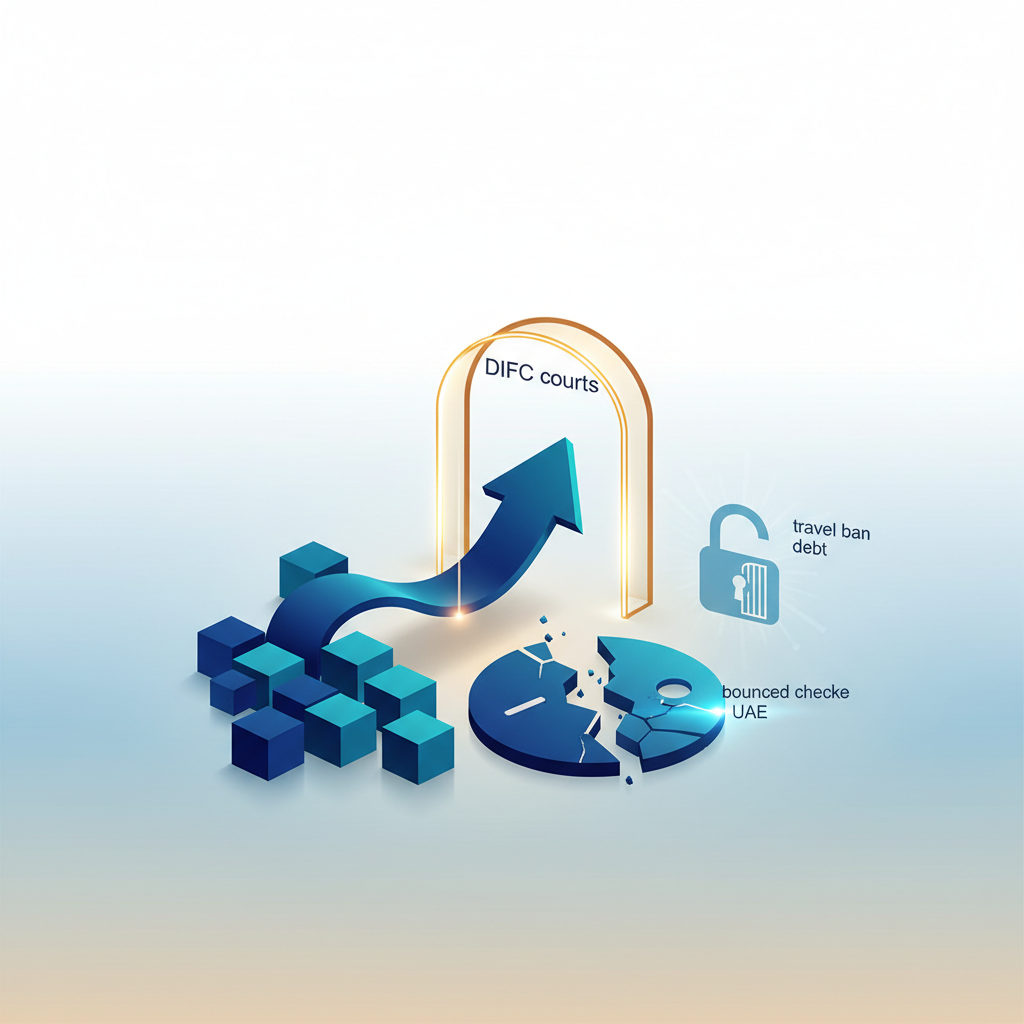
In the UAE, issuing a cheque that bounces isn't just a civil matter. It's a criminal offense. This gives creditors holding cheques significant leverage. The debtor faces potential prosecution, which tends to motivate payment.
Travel bans are real. UAE courts can implement travel bans against debtors within 24-48 hours of a judgment. For business owners who travel frequently—and Dubai is a hub city—this creates immediate, practical pressure. Many debts get paid to lift travel restrictions.
Courts move faster. While European commercial courts can take years, UAE proceedings often conclude in 3-6 months. The DIFC (Dubai International Financial Centre) courts operate in English and follow common law principles, making them accessible for international creditors.
The UAE Collection Process
Step 1: Proper Legal Notice
Before any formal action, you must send a legal notice. Critical requirements:
- Must be in both Arabic and English
- Should reference specific invoices and amounts
- Typically gives 15-30 days to respond
- Creates a paper trail for court proceedings
Many European companies send English-only notices and wonder why they're ignored. Arabic isn't optional—it's legally required for documents to have standing.
Step 2: Police Report (For Cheque Cases)
If you hold bounced cheques:
- File a police report at the issuer's local police station
- The cheque writer may face travel ban pending resolution
- Criminal proceedings can run parallel to civil case
- Often motivates settlement before court
This is the UAE's most distinctive feature. A €50,000 bounced cheque can result in genuine legal jeopardy for the debtor—not just civil liability.
Step 3: Court Filing
Two main options:
Local courts: Arabic proceedings, faster for straightforward cases, lower costs. Best for claims under AED 500,000 with clear documentation.
DIFC courts: English proceedings, common law principles, enforceable across UAE. Better for complex cases, international contracts, or when DIFC jurisdiction applies.
Choice of court affects timeline, costs, and enforcement options. Local expertise matters here.
Step 4: Enforcement
UAE enforcement tools include:
- Bank account freezing
- Asset seizure
- Travel ban (remarkably effective)
- Company license suspension
The travel ban deserves emphasis. For business owners who need to move freely—and in Dubai, most do—this creates immediate pressure that simply doesn't exist in European jurisdictions.
What European Companies Get Wrong
Treating UAE like Europe. Standard European collection letters, timelines, and escalation paths don't translate. The legal framework is different. The cultural context is different. The leverage points are different.
Ignoring relationship dynamics. Business relationships in the UAE carry weight. A dispute that goes public can affect the debtor's other relationships. Sometimes, the right conversation through the right channels resolves what formal proceedings cannot.
Moving too slowly. European companies often spend months on polite follow-ups before escalating. In Dubai, early legal notice signals seriousness. Waiting too long can signal that you're not committed to collection.
Not using local representation. UAE courts expect Arabic documentation and local legal representation. Trying to manage collection remotely, in English only, dramatically reduces your chances.
Recovery Rates and Timelines
With proper local approach:
- Recovery rate: approximately 78%
- Pre-litigation resolution: 40% of cases
- Average timeline to judgment: 3-6 months
- Enforcement after judgment: typically 1-3 months
These numbers compare favorably to most European jurisdictions—especially for international debts where local presence and expertise matter.
Key Takeaways
The Bottom Line
Dubai isn't a place where debts go to die. It's actually a jurisdiction with strong creditor protections—if you know how to access them. The companies that write off UAE receivables usually haven't tried the right approach. They've tried the European approach in a non-European market.
With proper local expertise, UAE collections often outperform European ones. The tools are stronger. The courts are faster. The enforcement is more practical.
Your Dubai debts may be more collectible than you think.
Collecty provides specialized B2B debt collection in the UAE and across the Middle East, combining international standards with local expertise. Contact us for UAE collection support.

Sarah Lindberg
International Operations Lead
Sarah coordinates our global partner network across 160+ countries, ensuring seamless cross-border debt recovery.